Introduction
Your SME is growing, customers are multiplying, the product range is expanding… but your Excel files are spiraling out of control, information gets lost, and errors keep repeating. If this situation sounds familiar, it is probably a sign that it is time to think seriously about implementing an ERP for your SME.
In this article, we explain why an ERP is essential once your company reaches a certain level of complexity, and above all when it is strategic to install it so that you do not hold back your growth.
When an SME outgrows the limits of Excel
Warning signs you should not ignore
The same data is entered several times.
Time is lost searching for information scattered across files.
Stock, pricing, or invoicing errors are frequent.
Visibility into cash flow or profitability is insufficient.
Each team works in its own files.
These symptoms show that your company is growing, but that your tools can no longer keep up. This is the stage at which an ERP becomes essential.
What is an ERP for an SME?
Definition and role of an ERP
An ERP is a system that centralizes all the key processes:
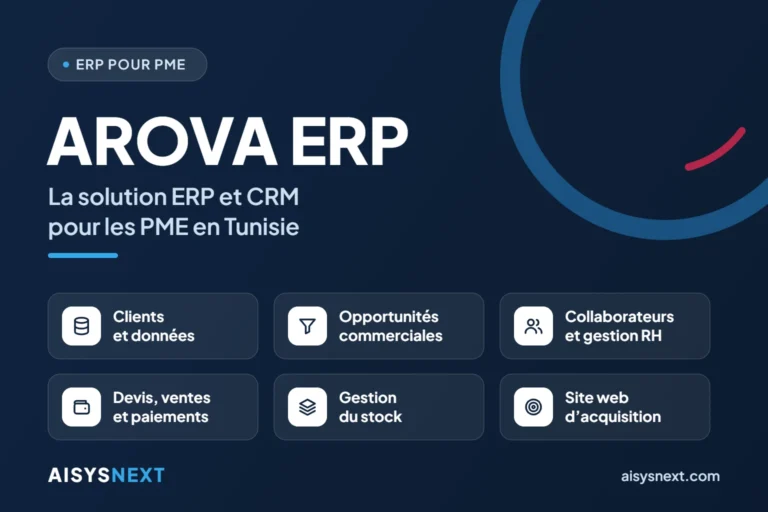
Sales and quotes
Invoicing and accounting
Purchasing and suppliers
Stock and inventory counts
Production or service delivery
CRM & customer relationships
Direct benefits for an SME
Greater responsiveness
Less administrative work
A global view in real time
Why an ERP is vital for a growing SME
Structure your processes before it is too late
An ERP lets you clarify workflows and build solid foundations.
Reduce errors and duplicates
Less manual entry
A single customer database
Fewer gaps between actual and theoretical stock
Save time through automation
Quotes, invoices, reminders, reports… everything becomes simpler.
Steer the company with reliable data
Access to:
Revenue
Margins
Cash flow
Inventory
Sales performance
The right time to install an ERP
Situations that should alert you
More than 5 to 10 people involved in management
Multi-site or multichannel business
Recurring problems → more time spent fixing than selling
Unreliable figures
New hires who feel lost
How to start an ERP project without disrupting your SME
Clarify your business needs
Key questions before you choose Odoo, ERPNext, Dolibarr…
Start with a functional core
Quotes / invoicing
CRM
Inventory
Accounting
Advanced modules → later.
Rely on an experienced partner
With AISYSNEXT:
Assessment
Selection of the right ERP
Secure migration
Training & support
AISYSNEXT: supporting the growth of SMEs
AISYSNEXT supports SMEs and startups in implementing open-source ERPs (Odoo, ERPNext, Dolibarr…) with a personalized approach:
Assessment
Technology selection
Step-by-step deployment
Training & ongoing support
Conclusion
An ERP is no longer reserved for large companies. Once your current tools can no longer keep up with your growth, it becomes vital to centralize your data and structure your processes.
With expert support and a gradual deployment, an ERP becomes a real performance accelerator for your SME.
To go further and see how an ERP can adapt to your business:
Talk about your project with an AISYSNEXT expert:
https://aisysnext.com/contact-equipe-expert/
Get an estimate or a quote for an ERP / CRM project:
https://aisysnext.com/demande-devis-gratuit/