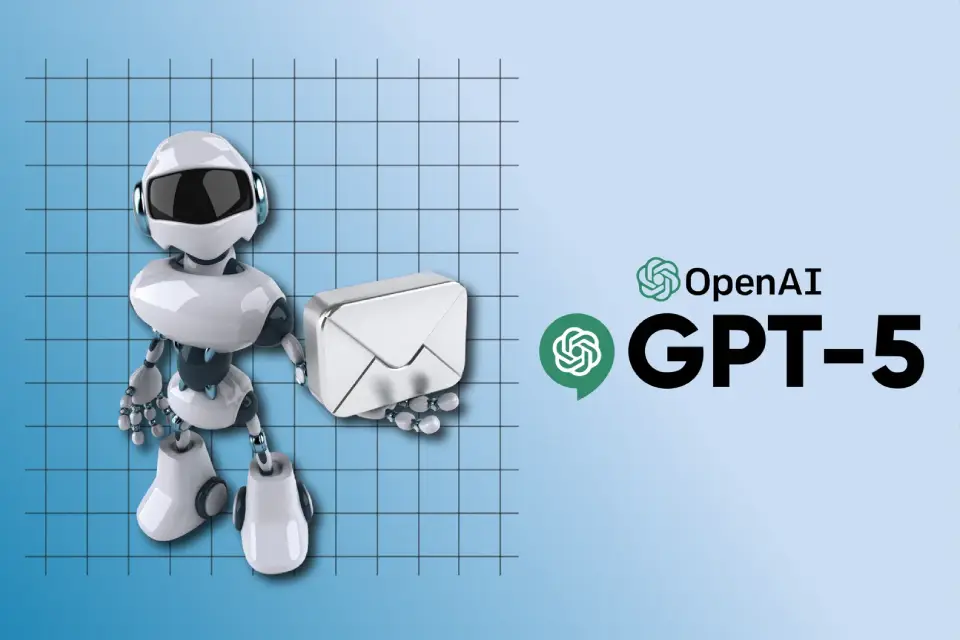
OpenAI has surprised the market again by unveiling GPT-5, the latest iteration of its advanced language models. Unlike its predecessors, GPT-5 no longer requires users to pick a specific model manually: it adapts automatically to each user’s needs. This new feature is generating a lot of enthusiasm, but concerns remain about whether everyone will have access to the technology, and about the impact it could have on diversity of thought.
1. GPT-5: what actually changes?
Automatic adaptation:
With previous versions (GPT-3, GPT-3.5, GPT-4, etc.), you had to select the model suited to a specific use (conversational chat, creative content generation, data analysis, etc.). GPT-5, by contrast, learns to recognize what the user expects and automatically adjusts its resources and computing power to produce the best possible answer.
Variable performance:
GPT-5 remains open to the general public, but its performance will be more or less limited depending on the subscription or the infrastructure available. In other words, an individual user without a substantial budget will not get the same processing power as a company able to pay for a “premium” version. This approach raises new questions about equal access and the gaps between different users.
2. A first risk: unequal access
The first pitfall raised by this new generation of GPT is that usage will differ according to purchasing power:
- “Lite” vs. “premium” versions: Although GPT-5 is presented as open to everyone, we can expect increasingly marked segmentation, with paid plans that clearly outperform the free or affordable options.
- A wider digital divide: Wealthy users, whether large companies, government organizations or affluent individuals, will be able to use a model that is faster, more accurate and better trained. Less well-off users, on the other hand, may have to settle for a “cut-price” AI with limited features and lower-quality results.
- A significant social impact: In a world where information and data processing speed have become essential, digital inequalities could turn into knowledge inequalities. As the saying goes, “information is power.” Those who cannot access the best artificial intelligence will fall behind, not only in academic and professional fields, but also in their daily lives.
What are the concrete risks?
- A gap that could leave some individuals or groups with merely “ordinary” skills and knowledge compared with those who have sophisticated tools.
- Lower competitiveness for small businesses, which cannot afford to invest in costly AI solutions.
- A possible rise in resentment or hostility toward technology, perceived as unfair.
3. A second risk: uniformity of thought
When everyone relies on the same AI engine, a second danger emerges: the standardization of ideas, creativity and critical thinking.
- Less diversity of thinking: However powerful it is, GPT-5 is still based on statistical models and a “style” of text generation. If it becomes the single reference, it can steer collective thinking toward similar wording, ideas or reasoning.
- Dependence on AI: If the tool becomes so widespread that it replaces a considerable share of human thinking, people could lose the habit of comparing several points of view or checking their information themselves.
- A brake on innovation: Historically, major innovations have often come from differences of opinion or from exploration off the beaten track. By making every starting point the same, we risk drastically reducing the room for exploration.
Symptoms that are already visible:
In the past, with older models (GPT-3 or GPT-4), we already saw a tendency to format answers in a similar way. When these AI tools were used on a massive scale, some content (blog articles, email copy, social media posts) seemed to look more and more alike. GPT-5, by holding a near-monopoly position, could amplify this phenomenon.
4. The ethical and societal stakes
Behind these two major risks lies the broader question of the role of artificial intelligence in our societies:
- What role for regulation? Public authorities must strike a balance between encouraging innovation and protecting the common good.
- How can we guarantee healthy competition? To prevent a single company (OpenAI or others) from becoming the only reference, it is crucial to support alternative initiatives, especially open source ones, in order to keep a plurality of approaches.
- How can we prepare society? The integration of AI must go hand in hand with efforts in education, training and awareness of responsible uses of the technology.
5. Toward an AI that benefits everyone: ideas to consider
Despite the concerns, GPT-5 is also a considerable technological advance. It is therefore essential to think about how this innovation can truly benefit as many people as possible:
- Make the “basic” versions genuinely capable
Users who cannot afford a premium version should not be penalized too heavily. OpenAI could, for example, introduce a responsible pricing policy or provide subsidies for education and nonprofit organizations. - Develop competitive ecosystems
The emergence of other free and open source AI projects (such as certain branches that came out of the OpenAI community or independent research labs) is necessary to maintain a diversity of technical viewpoints and generation models. - Educate, inform and build accountability
- Train users, from an early age, in critical thinking and in checking information.
- Raise awareness of how AI works (potential biases, limits, misuse).
- Encourage the creation of varied content to avoid standardization.
- Encourage transparency
OpenAI and AI providers must communicate clearly about the different capabilities offered at each subscription level. This transparency will foster a better understanding of the technology’s limits and avoid confusion about the nature of the results obtained.
GPT-5 symbolizes a major turning point: it is the first time that an artificial intelligence that adapts automatically to the user is offered on a very large scale. Its potential is immense, but it is not immune to abuses. The two major risks – unequal access and uniformity of thought – deserve particular attention.
For innovation to bring real progress, it must come with careful thought about its uses and consequences. The challenge is considerable: to make GPT-5 an inclusive, stimulating and enriching tool for everyone, without sacrificing intellectual diversity or widening a digital divide between the most affluent and the rest of the population.
Ultimately, GPT-5 clearly illustrates the permanent duality of technology: a formidable source of opportunities, provided we do not ignore its potentially harmful aspects. It is up to us, as a society, to find solutions that ensure this new-generation AI is a positive and shared step forward.